Sealing and insulation materials quietly shape the safety, efficiency, and durability of modern industry. They close gaps, control heat, reduce vibration, and protect equipment from moisture, dust, chemicals, and pressure changes. The question “which industries use sealing and insulation materials” has a broader answer than many readers expect. These materials appear in construction, automotive manufacturing, aerospace, electronics, energy, marine engineering, rail transport, refrigeration, and medical equipment.
Dr. Joseph Lstiburek, a respected building-science expert, has often stated, “A building is a system.” His principle applies beyond buildings. A poorly sealed pipe, enclosure, or machine can weaken an entire operation. For example, a factory gasket may prevent a hot fluid from leaking near electrical controls. A foam insulation layer may keep chilled water cold while condensation gathers outside the pipe. Small details matter.
These materials also support energy conservation. Insulated tanks, ducts, engines, and process lines can reduce unwanted heat transfer. Seals can help maintain pressure and prevent contamination. In aerospace and automotive environments, engineers select materials according to temperature, movement, chemical exposure, and service life. There is no universal solution.
That point deserves more attention. A material that performs well in a dry warehouse may fail beside saltwater or repeated vibration. Selection errors can remain invisible until maintenance costs rise. Industry guidance, testing, and qualified engineering review therefore matter. This article explores why these materials are used, where they perform best, and what limitations decision-makers should consider before choosing a sealing or insulation system.
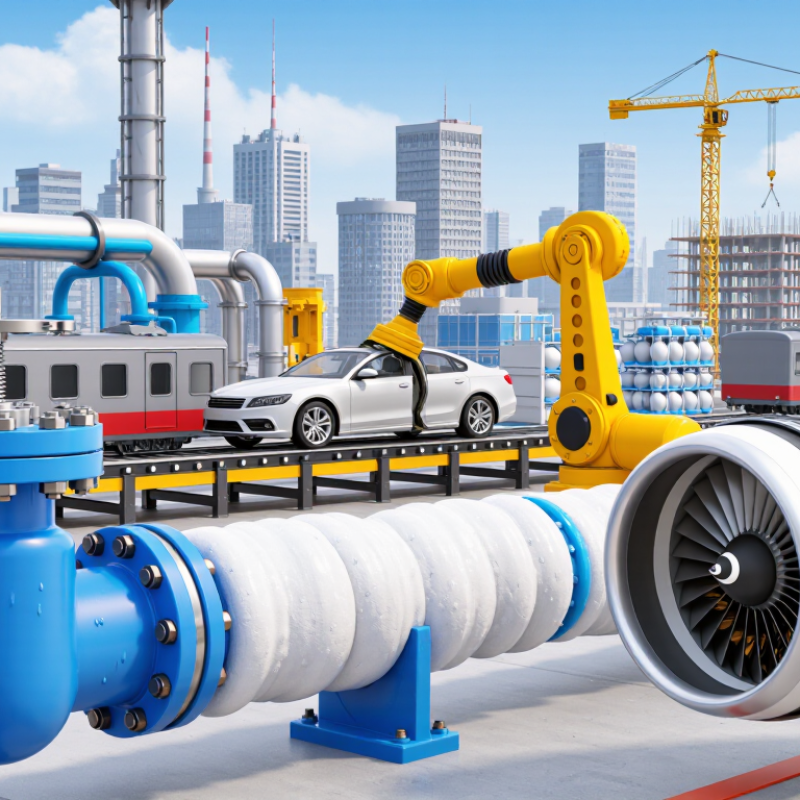
Sealing materials close unwanted gaps between connected surfaces. They help stop water, oil, air, dust, and process gases from escaping or entering equipment. Common forms include gaskets, O-rings, packing, tapes, and liquid sealants. Their performance depends on temperature, pressure, chemical exposure, and surface movement.
Insulation materials reduce the transfer of heat, electricity, or sound. Thermal insulation may surround a hot pipe, a cold storage line, or a processing vessel. Electrical insulation separates conductors and limits current leakage. Acoustic insulation can reduce vibration and workplace noise. Some materials perform two roles, but their limits must be checked carefully.
In practical maintenance, a gasket may look intact while losing its sealing force. A wet insulation layer may also become less effective. Small details matter. Workers should inspect surface cleanliness, bolt pressure, thickness, and installation direction. Material data sheets and test reports provide useful guidance, especially for high-temperature or chemically aggressive service.
No material is perfect. A seal that works well on a clean flange may fail on a rough or misaligned joint. Insulation can crack after repeated heating and cooling. I have found that installation mistakes are often blamed on material quality too quickly. Regular inspection, correct storage, and realistic service conditions usually provide a clearer answer.
Sealing materials create controlled barriers around pipes, tanks, doors, and process equipment. They stop liquids, gases, dust, and microbes from moving through small gaps. In food and pharmaceutical facilities, one damaged gasket can expose clean surfaces to condensation or airborne particles. The risk is not theoretical. The World Health Organization reports that contaminated food causes about 600 million illnesses each year. Proper sealing supports safer production, although it cannot replace cleaning and process controls.
Seals also protect efficiency. The U.S. Department of Energy estimates that compressed-air leaks can waste 20–30% of compressor output. A leak may sound like a faint hiss near a valve, yet it can increase energy demand continuously. Materials must match temperature, pressure, chemicals, and movement. A perfect seal is rarely permanent. Heat cycles, vibration, and incorrect installation slowly change its performance. This is where routine inspection matters, though teams sometimes rely too heavily on visual checks.
Tips: Check compression marks, cracks, swelling, and surface hardening. Use pressure testing or ultrasonic detection when possible. Record inspection dates and replacement reasons. Small records can reveal repeated failures. Choose certified materials for the intended environment, then verify their performance in actual service. According to ISO cleanroom principles, controlling contamination requires both suitable materials and disciplined operating practices.
Industrial sealing and insulation materials do more than close gaps. They manage heat, sound, and electricity across equipment, pipes, walls, and electrical enclosures. Thermal insulation slows heat flow, keeping steam hot and chilled water cold. Seals reduce air, moisture, and chemical movement at joints. This matters at scale. The IEA’s 2023 Global Status Report for Buildings and Construction states that buildings use about 30% of global final energy and create 26% of energy-related emissions. Better insulation cannot solve every loss, but it can reduce avoidable demand.
Sound control requires a different design choice. Dense barriers block transmission, while fibrous or cellular layers absorb reflected noise. The World Health Organization estimated that environmental noise causes more than one million healthy life-years to be lost annually in Western Europe. In factories, a poorly sealed access panel can turn a quiet enclosure into a sharp mechanical hum. Electrical insulation separates conductors, limits leakage, and helps prevent tracking under heat, dust, or moisture. Engineers check dielectric strength, temperature rating, compression, and aging—not thickness alone. The difficult truth is that joints often fail before the material does.
Tips: Specify operating temperature first. Then check moisture, vibration, fire performance, and cleaning chemicals. Inspect seams, gaskets, and cable entries after installation. A thermal camera can reveal missing insulation. An acoustic meter can locate leakage. Recheck after maintenance. This step is often skipped. That is a mistake. Materials also need realistic tolerances. A perfect laboratory fit may not survive movement, uneven surfaces, or rushed installation.
Sealing and insulation materials support many industries where heat, pressure, fluids, or noise must remain controlled. Construction projects use pipe seals, expansion-joint systems, and thermal insulation around walls, roofs, and HVAC equipment. These materials reduce energy loss and help prevent moisture from entering hidden spaces.
Energy facilities depend on them heavily. Power stations, solar plants, refineries, and gas-processing sites need seals that tolerate high temperatures, vibration, and changing pressure. Insulation also protects workers near hot pipes and reduces heat transfer across process equipment. In chemical production, material compatibility matters greatly. A gasket may resist water but deteriorate quickly when exposed to solvents or corrosive chemicals.
Transportation industries face different demands. Automotive and rail systems use seals around doors, windows, engines, batteries, and hydraulic lines. Aerospace applications require lightweight insulation that performs under extreme temperature changes. Marine equipment needs protection from saltwater, movement, and constant humidity. Small failures can cause noise, leaks, corrosion, or expensive downtime.
Food processing and pharmaceutical facilities use hygienic seals around pumps, valves, tanks, and filling equipment. These components must tolerate cleaning chemicals and repeated temperature cycles. Data centers and electronics manufacturers also use insulation to manage heat, vibration, and electrical risks. In practice, installation quality can matter as much as the material itself. A perfect gasket may fail when cut poorly, compressed unevenly, or matched with the wrong surface. Material selection should consider pressure, temperature, exposure time, maintenance access, and relevant safety standards. A catalog choice is not always a dependable field choice.
Sealing and insulation materials help industries control heat, prevent leakage, protect equipment, improve energy efficiency, and maintain safe operating conditions. The chart compares representative maximum process temperatures in industries that commonly depend on these materials.
Representative process temperatures vary by equipment, product, and operating conditions. High-temperature applications typically require advanced refractory, ceramic, graphite, or metallic sealing and insulation solutions.
Industries select sealing and insulation materials by matching risks, not by choosing the cheapest option. A gasket near hot oil needs temperature resistance, chemical compatibility, and controlled compression. Pipe insulation must limit heat transfer while surviving vibration, moisture, and maintenance. The decision is practical: engineers review operating temperature, pressure, media, fire behavior, service life, and installation quality.
The International Energy Agency’s Energy Efficiency 2023 report states that industry uses about 37% of global final energy. Small thermal losses can therefore become expensive across a large facility. The U.S. Bureau of Labor Statistics recorded 5,283 fatal workplace injuries in 2023. This figure does not prove that insulation prevents accidents, but it shows why surface-temperature control, dependable sealing, and inspection deserve serious attention. Material data sheets help, yet real site conditions can expose weaknesses.
Tips: Build a selection matrix before purchasing. Record temperature cycles, pressure changes, chemical exposure, moisture, and access for repair. Ask for test standards, aging data, and fire-performance evidence. Do not trust one laboratory value. Field installation can reduce performance through poor compression, damaged jackets, or contaminated surfaces. No material is perfect. Engineers should review failures and revise specifications instead of repeating familiar choices.
| Material Family | Primary Function | Typical Continuous Service Temperature | Typical Thermal Conductivity | Sealing or Insulation Performance | Fire, Chemical, and Environmental Behavior | Common Industrial Uses | Key Selection Considerations |
|---|---|---|---|---|---|---|---|
| Thermal Insulation Materials | |||||||
| Mineral Wool | Reduces heat transfer, surface temperature, and energy loss | Approximately -40 to 650°C, depending on grade and facing | Approximately 0.035–0.045 W/m·K at room temperature | Good thermal and acoustic insulation; does not normally provide a pressure seal by itself | Generally non-combustible in its mineral form; performance can be affected by moisture, compression, and facing materials | Process piping, storage tanks, HVAC systems, boilers, and industrial equipment | Temperature range, moisture control, thickness, mechanical strength, fire requirements, and installation space |
| Calcium Silicate | Provides rigid, high-temperature insulation | Approximately 650 to 1,000°C, depending on formulation | Approximately 0.05–0.10 W/m·K, depending on temperature and density | Good dimensional stability and load-bearing capability; requires joints or protective coverings for complete system performance | Non-combustible and resistant to many industrial environments; may absorb water if left unprotected | High-temperature piping, furnaces, kilns, turbines, and steam systems | Maximum temperature, resistance to vibration, compressive strength, moisture protection, and maintenance access |
| Ceramic Fiber | Provides lightweight insulation for very high-temperature applications | Approximately 1,000 to 1,260°C for continuous service, depending on grade | Approximately 0.08–0.18 W/m·K, depending on temperature and density | Very low thermal mass and rapid heat-up; typically used as insulation rather than as a pressure or fluid seal | Non-combustible and resistant to thermal shock; fibers require suitable handling controls and protective design | Furnace linings, heat-treatment equipment, expansion joints, and high-temperature insulation blankets | Operating temperature, thermal cycling, fiber exposure, mechanical durability, and worker-safety controls |
| Closed-Cell Elastomeric Foam | Controls heat gain or loss, condensation, and moisture vapor transmission | Approximately -50 to 150°C, depending on elastomer type and grade | Approximately 0.033–0.040 W/m·K at room temperature | Flexible and effective around irregular surfaces; joints must be properly sealed to maintain vapor resistance | Good moisture resistance; fire performance varies by formulation and must be verified for the installation | Chilled-water piping, refrigeration, air-conditioning ducts, and building services | Condensation control, UV exposure, temperature range, smoke and flame requirements, flexibility, and joint sealing |
| Phenolic Foam | Provides high thermal resistance with relatively thin insulation sections | Approximately -180 to 120°C, depending on product construction and facing | Approximately 0.020–0.025 W/m·K at room temperature | Efficient insulation where space is limited; protective facings are commonly used to improve durability and moisture resistance | Low flame spread is possible in qualified systems, but smoke production, facings, and installation details must be assessed | HVAC ductwork, building services, refrigeration, and industrial process systems | Required insulation thickness, fire and smoke classification, moisture exposure, mechanical protection, and compatibility with coatings |
| Sealing Materials | |||||||
| Elastomeric Rubber Gaskets | Creates a flexible seal between mating surfaces and compensates for minor movement | Approximately -50 to 150°C, depending on rubber chemistry | Not normally selected for thermal insulation; typical values are approximately 0.15–0.25 W/m·K | Good sealing against water, air, and low-to-moderate pressure when compressed within design limits | Material resistance varies significantly with oils, fuels, solvents, ozone, weathering, and chemicals | Pipe flanges, HVAC connections, pumps, doors, access panels, and low-pressure equipment | Fluid compatibility, temperature, pressure, compression, flange condition, aging, and expected movement |
| Expanded Graphite Gaskets | Seals high-temperature flanges and equipment joints | Approximately -200 to 450°C in oxidizing service; higher temperatures may be possible in controlled non-oxidizing environments | Not primarily used as thermal insulation; thermal conductivity is comparatively high | Excellent conformability and strong resistance to many chemicals; oxidation can limit service life | Good chemical resistance and low permeability; requires careful assessment in oxygen-rich or strongly oxidizing service | Valves, pipe flanges, heat exchangers, pressure vessels, and high-temperature process equipment | Atmosphere, oxidation risk, flange load, pressure, temperature cycling, chemical exposure, and handling strength |
| PTFE-Based Seals | Provides low-friction sealing and broad chemical resistance | Approximately -200 to 260°C for continuous service, depending on design and grade | Approximately 0.20–0.30 W/m·K; not normally selected as a thermal insulator | Very good chemical sealing performance and low friction; creep and cold flow must be controlled through design | Excellent resistance to many chemicals and low moisture absorption; compatibility with molten alkali metals and certain fluorinating agents requires review | Chemical processing, food-processing equipment, pumps, valves, and instrument connections | Chemical compatibility, pressure, temperature, creep resistance, dimensional stability, and regulatory requirements |
| Compressed Non-Asbestos Fiber Gaskets | Provides economical sealing for moderate-temperature pipe and equipment joints | Approximately -40 to 400°C, depending on fiber, binder, and service conditions | Not primarily used as thermal insulation | Good conformability and sealing capability when the correct compression and surface finish are achieved | Performance depends on binder and reinforcement; chemical compatibility and temperature limits must be verified for each application | Water, steam, oil, compressed air, and general process piping | Media compatibility, bolt load, flange flatness, pressure, temperature cycling, and gasket thickness |
| Metallic and Spiral-Wound Gaskets | Seals high-pressure and high-temperature flanged connections | Commonly approximately -200 to 550°C; actual limits depend on metal, filler, and construction | Not used as thermal insulation; metallic components conduct heat efficiently | High pressure and temperature capability with proper flange design, bolt loading, and installation control | Can provide strong resistance to pressure, fire, and many process fluids; material selection must match corrosion conditions | Refineries, chemical plants, power generation, heat exchangers, and pressure vessels | Pressure class, temperature, fluid chemistry, flange type, bolt load, leakage requirements, and fire-safe design |
Note: Values are typical engineering ranges intended for preliminary material comparison. Actual performance depends on grade, density, thickness, pressure, installation quality, surface condition, moisture exposure, and chemical compatibility. Final selection should be confirmed against the applicable technical datasheet, safety requirements, and industry standards.
Sealing materials close gaps between connected surfaces. They help prevent water, oil, air, dust, and process gases from moving through joints.
Common forms include gaskets, O-rings, packing, tapes, and liquid sealants. The right choice depends on pressure, temperature, chemicals, and movement.
Insulation slows heat, electricity, or sound transfer. It can surround hot pipes, chilled lines, processing vessels, walls, or electrical enclosures.
It helps keep steam hot and chilled water cold. This reduces avoidable heat loss during industrial operation.
Dense barriers block sound transmission. Fibrous or cellular layers absorb reflected noise and may reduce workplace vibration.
It separates conductors and limits current leakage. Engineers check dielectric strength, temperature rating, moisture exposure, dust, and aging.
Some materials perform both roles. Their limits still require careful checking, especially under heat, chemicals, movement, or repeated cleaning.
A gasket may lose sealing force while looking intact. Rough surfaces, misalignment, incorrect bolt pressure, or dirt can cause failure.
Check seams, gaskets, cable entries, thickness, cleanliness, and installation direction. A thermal camera can reveal missing insulation.
Material quality is often blamed too quickly. Installation errors, poor storage, unrealistic tolerances, and skipped inspections may be the real causes.
Sealing and insulation materials are essential components used to protect systems, improve efficiency, and maintain safe operating conditions. Sealing materials fill gaps between connected surfaces to prevent leaks, moisture, dust, chemicals, and other contaminants from entering or escaping. Insulation materials reduce the transfer of heat, sound, or electricity, helping equipment maintain stable temperatures, operate more quietly, and avoid energy loss or unwanted electrical contact.
The question of which industries use sealing and insulation materials can be answered broadly: construction, automotive, aerospace, energy, electronics, manufacturing, transportation, and many other sectors depend on them. These materials support pipelines, machinery, buildings, electrical systems, engines, and industrial equipment. When selecting a material, industries consider temperature range, pressure, chemical exposure, flexibility, durability, fire resistance, electrical performance, environmental conditions, and maintenance needs. Choosing the right combination helps extend service life, improve reliability, reduce operating costs, and protect workers and equipment.

Royflexa Rubber