Choosing materials for high temperatures in 2026 begins with the conditions at the component, not a headline temperature rating. A furnace door, turbine blade, and exhaust sensor face different combinations of heat, stress, gases, and temperature cycling. The key question is “what makes a material suitable for high temperature environments” when these factors act together?
Materials-selection expert Professor Michael F. Ashby has emphasized that engineering choices involve balancing competing requirements. In practical terms: “A high-temperature material must retain useful properties under the actual service conditions.” This is a summary, not a verbatim quotation. A stainless-steel coupon may look sound after brief heating, yet creep slowly under sustained load. A ceramic may resist heat but crack when a cold draft hits it. Small details matter.
This guide compares alloys, ceramics, and other candidate materials through measurable criteria: oxidation resistance, creep strength, thermal shock, and compatibility with the surrounding atmosphere. It also considers fabrication, inspection, and lifecycle cost. There is no universal winner. Test data can be incomplete, and real service conditions are rarely tidy. The right choice comes from matching verified material data to the part’s temperature profile, loads, environment, and expected life.
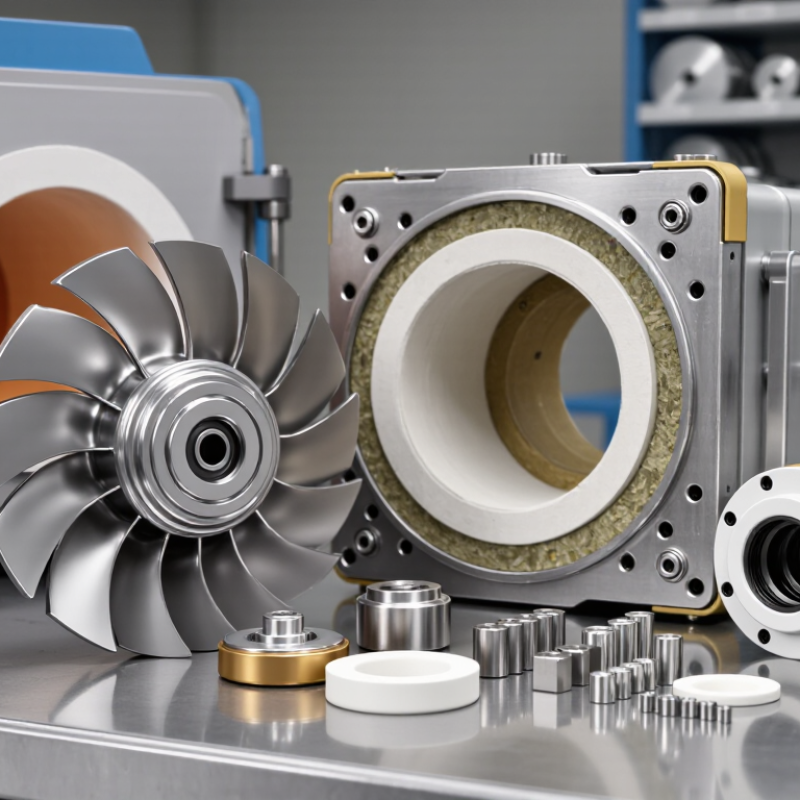
A material’s temperature limit is not a single number on a datasheet. Define the highest continuous temperature, brief peaks, and how often those peaks occur. A furnace wall held at 900°C behaves differently from a part that briefly reaches 1,050°C during startup. Record both. Also note whether the temperature changes slowly or swings rapidly; repeated expansion and contraction can cause cracking or loosen joints.
Then map the surroundings. Will the material contact air, steam, fuel gases, molten salts, or cleaning chemicals? Oxygen can accelerate scaling, while sulfur-bearing gases may attack some alloys. Pressure, vibration, abrasion, and contact with neighboring materials matter too. A hot seal under compression faces a different problem from an exposed panel at the same temperature. Small details count.
Use actual operating records when available, not just design estimates. Place sensors near the hottest point, and check readings during startup, steady operation, and shutdown. If measurements are uncertain, say so. That uncertainty may change the choice. One thing is easy to overlook: maintenance access. A material that performs well in a laboratory may be difficult to inspect or replace in a cramped installation. Define the conditions on paper, then verify them against the equipment’s real duty cycle.
Start with the highest material temperature during normal operation, startup, shutdown, and upset conditions—not just the average process temperature. The ranges below are screening references for oxidation resistance in air, not allowable design temperatures; load, exposure time, atmosphere, and product form can change the suitable limit.
| Material family | Indicative oxidation reference in air | Typical operating conditions | Key selection considerations |
|---|---|---|---|
| Carbon steel | Around 400–450 °C (750–840 °F) for many applications before oxidation and strength concerns become significant. | Moderate-temperature equipment with known loads and limited thermal cycling. | Check oxidation, creep, and loss of strength at temperature. Do not select from temperature alone. |
| Type 304 stainless steel | Oxidation references are about 925 °C (1,700 °F) for continuous exposure and 870 °C (1,600 °F) for intermittent exposure; these are not structural design limits. | Oxidizing environments where general corrosion resistance and fabrication are important. | High-temperature strength, thermal cycling, and atmosphere chemistry may govern before oxidation resistance does. |
| Type 310 stainless steel | Often used for oxidation resistance at roughly 1,050 °C (1,920 °F) continuously, with higher intermittent exposure possible depending on conditions. | Furnace components and other hot, oxidizing service. | Verify creep strength, thermal cycling performance, and resistance to sulfur-bearing or carburizing atmospheres. |
| Nickel-chromium alloy | Some grades have oxidation-resistance references near 1,175 °C (2,150 °F); the applicable limit depends on grade and exposure. | Hot equipment requiring a combination of oxidation resistance and useful high-temperature strength. | Confirm the specific grade, stress, exposure duration, and compatibility with contaminants or process gases. |
| Iron-chromium-aluminum alloy | Certain grades can be used for heating elements at temperatures approaching 1,200–1,300 °C (2,190–2,370 °F), depending on design and service life. | Electrical heating elements and other low-load applications in oxidizing atmospheres. | High-temperature capability does not imply suitability for heavily loaded structures; assess brittleness, sag, and cycling. |
| High-purity alumina ceramic | Many grades retain useful properties at temperatures around 1,600 °C (2,910 °F), subject to purity, porosity, and design. | Electrical insulation, furnace fixtures, and components where oxidation resistance is important. | Brittle behavior and thermal shock can limit service; check temperature gradients, impact risk, and mechanical loading. |
Before specifying a material: record peak and steady-state temperatures, exposure duration, atmosphere (including oxygen, steam, sulfur, or carbon), applied stress, thermal-cycle frequency, corrosion risks, and required service life. Use grade-specific supplier data and applicable design codes to establish allowable operating limits.
Record the highest continuous temperature, brief peaks, and how often they occur. Note heating and cooling rates. A wall steady at 900°C differs from a part briefly reaching 1,050°C.
Actual readings can differ from design estimates. Place sensors near the hottest point and check startup, steady operation, and shutdown. Uncertain measurements should be recorded too.
Air, steam, fuel gases, molten salts, and cleaning chemicals can all matter. Oxygen may accelerate scaling, while sulfur-bearing gases can attack some alloys.
Yes. Pressure, vibration, abrasion, and contact with neighboring materials can change performance. A compressed hot seal faces different demands from an exposed panel.
Test representative samples under realistic conditions. Include joints, coatings, and surface finishes. A small coupon may not predict how the full assembly performs.
Ask for test conditions, measured properties, and acceptance limits. Current standards help compare results, but they cannot guarantee suitability for every installation.
Results may not apply if the service atmosphere differs from the test atmosphere. Verify that the tested environment resembles the actual one.
Consider oxidation, creep, thermal fatigue, inspection access, and replacement intervals. Longer service life may still bring difficult maintenance or more downtime.
Cramped access can make inspection or replacement difficult, even when laboratory performance looks strong. Check the equipment layout. Small awkward details count.
Choosing materials for high-temperature applications in 2026 begins with a clear understanding of the operating conditions. Define the expected temperature range, exposure duration, heating and cooling cycles, mechanical loads, and surrounding atmosphere. These details help narrow the options among material families such as metals, ceramics, and high-performance polymers. The key question is what makes a material suitable for high temperature environments: its ability to retain essential properties and perform reliably under the combined conditions it will face.
Compare thermal stability, strength, resistance to oxidation or corrosion, and dimensional consistency, while also considering compatibility with neighboring materials. Design constraints, available manufacturing processes, joining methods, and ease of maintenance can influence the best choice as much as basic material properties. Before final selection, verify performance through relevant testing and standards, then review expected service life, inspection needs, and replacement considerations. This structured approach helps balance safety, durability, practicality, and overall lifecycle requirements.

 Royflexa Rubber